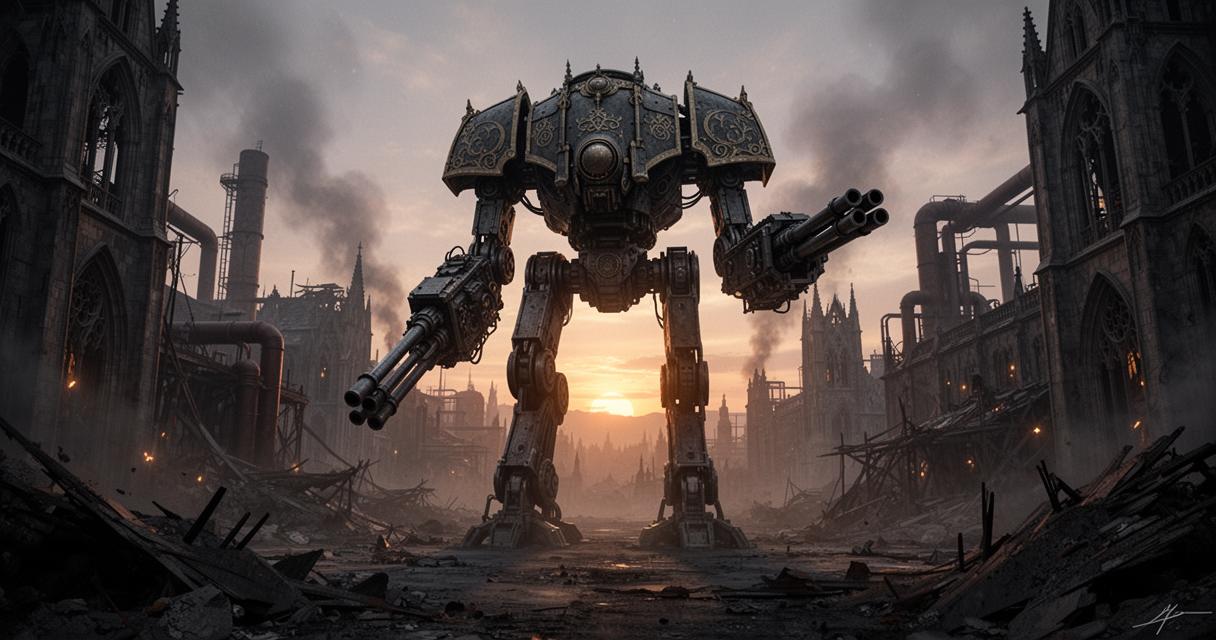
Few hobbies have endured with quite the same ferocity as Warhammer, a universe that has spent four decades building its mythology one miniature at a time. At the very heart of this sprawling lore stand the Titans — colossal god-machines of iron and fire that dwarf every other engine of war on the battlefield. Among them, the Warlord Titan reigns supreme as the ultimate expression of imperial military ambition, a walking fortress that has defined entire eras of both narrative and tabletop play.
At a glance
- Titans have evolved over four decades from early metal models to modern plastic kits, becoming central icons of Warhammer lore and tabletop gameplay.
- The Warlord Titan stands as a defining symbol of Imperial military power, serving as a mobile fortress capable of immense destruction on the battlefield.
- The Horus Heresy transformed Titan Legions into key political players, forcing them to choose sides in a conflict that permanently scarred the Imperium.
- Each Titan houses a mysterious machine spirit that can be dangerously corrupted by Chaos, turning these god-machines into feral engines of destruction.
- The tactical deployment of a Warlord Titan requires a combined arms approach, where infantry and smaller units protect the giant from close-range threats.
- While the Imperium relies on industrial might, factions like the Eldar and Orks field their own unique god-machines, resulting in cinematic and grand-scale confrontations.
Evolution of the God-Machines Across Warhammer History
From early rogue trader epic battles to modern plastic kits
The story of Titans in Warhammer begins in the earliest days of the hobby, when Rogue Trader introduced players to a universe teetering on the edge of perpetual war. Back then, the rules and lore were rougher around the edges, printed across pages of White Dwarf magazine that served as both rulebook and community bible. Titans appeared as colossal presences on the battlefield, their rules sprawling and their metal models — heavy, chunky, and deeply characterful — demanding considerable effort to assemble and paint. Those original metal kits have since become artefacts of the hobby’s old guard, cherished by collectors who remember a time before computer-assisted design.
The arrival of Epic as a standalone game system transformed the way players engaged with Titans. Suddenly, entire legions could be fielded at a smaller scale, allowing the sheer mass of these machines to be represented meaningfully on the tabletop. The Epic editions captured something genuinely thrilling — the suspense of watching a Warlord Titan advance through a sea of infantry and armour, its weapons cycling through targets with mechanical indifference. In more recent years, plastic kits have made the Warlord Titan accessible to a broader audience, and the release of dedicated Titanicus rules gave the machines their own dedicated stage once more.
How warlord titans shaped the horus heresy narrative
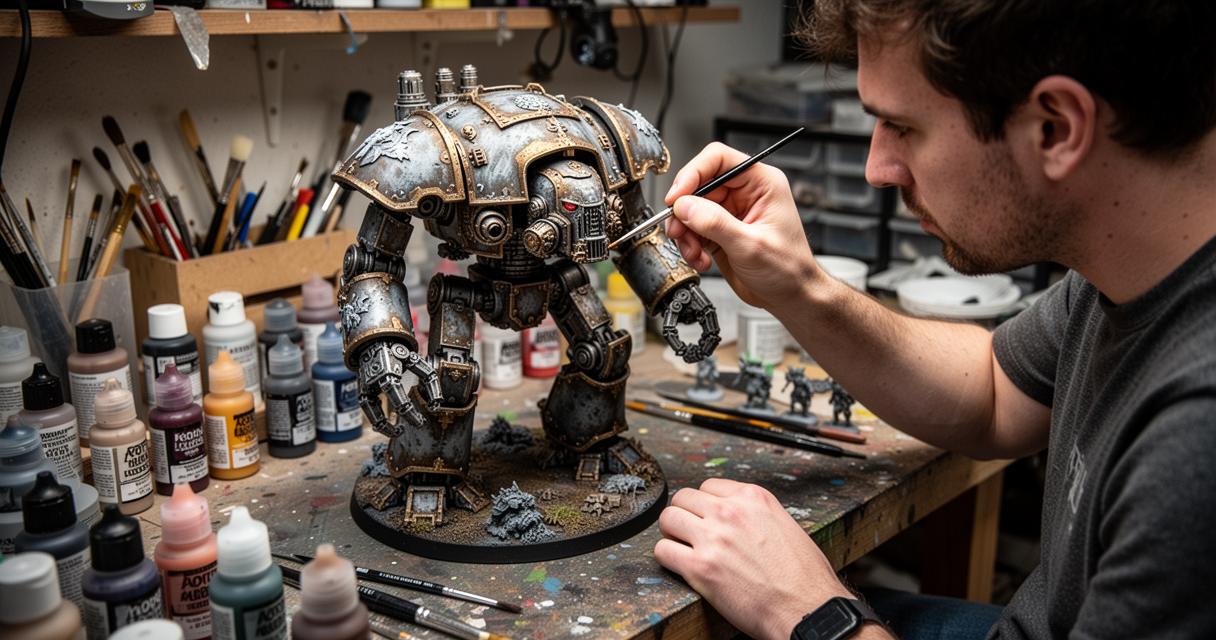
No single event in Warhammer lore has done more to define the Titans than the Horus Heresy, the great civil war that tore the Imperium apart and left scars visible across every corner of the setting. The Heresy transformed Titans from mere weapons of war into symbols of political allegiance and betrayal. Titan Legions — the Adeptus Titanicus, those ancient brotherhoods of pilots and machine-priests — were forced to choose sides, and their choices echo through the lore to this day. Some Legions marched alongside the Astartes of the traitor cause; others held the line for the Emperor with fierce and terrible loyalty.
The forge worlds that built and maintained these machines became strategically vital, drawn into the conflict as both prizes and participants. The bond between a Titan and its crew, a relationship mediated by the mysterious machine spirit dwelling within each god-machine, added a layer of genuine emotional weight to what might otherwise have been purely mechanical warfare. Warlord Titans, with their commanding size and firepower, became the defining image of that catastrophic war.
Engineering the Warlord Titan and Its Devastating Arsenal
Iconic Weapons and Field Power of the Imperial Legions
A Warlord Titan is not merely large — it is a carefully engineered argument for imperial dominance, and every element of its design serves that purpose. The weapons mounted on its carapace and arms represent the pinnacle of what the forge worlds can produce, from lasers capable of carving through battle tanks to volcanic cannons that reshape terrain with each shot. In the field, these machines operate as mobile fortresses, capable of engaging targets at range whilst absorbing punishment that would obliterate any conventional unit.
The crews who pilot Warlords — the Princeps and their moderati — train for years within simulacra before ever interfacing with a live machine. The experience of becoming part of a Titan, of feeling its power coursing through neural link, is described in the lore as both exhilarating and deeply dangerous. Supporting elements such as Space Marines, Knights, and regular infantry provide the close-quarters defence that these giants cannot offer themselves, creating a combined arms doctrine that rewards thoughtful tactical play on the tabletop.
The Threat of Chaos Corruption in Machine Spirits
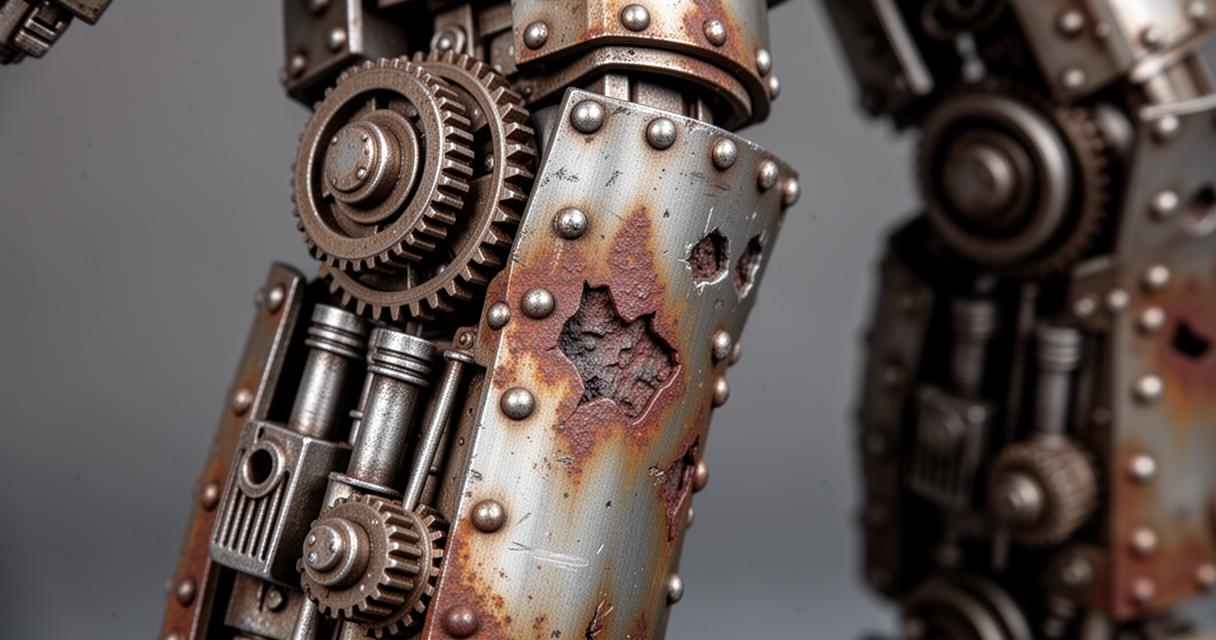
The machine spirit of a Titan is both its greatest asset and its most vulnerable point. When Chaos corruption takes hold — whether through warp exposure, the influence of daemonic entities, or the slow rot of heretical doctrine — the effects are catastrophic. A corrupted Titan turns its weapons on its former allies, its grace replaced by something feral and purposeful in the worst possible way. The tentacles of dark influence can twist a god-machine into a truly horrifying engine of destruction, its original purpose warped beyond recognition. Forge World and Games Workshop have explored this theme extensively, and it remains one of the most compelling sources of narrative suspense in the entire setting.
Tactical Supremacy of Titans on the Tabletop Battlefield
Deploying heavy metal support alongside space marines and infantry
On the tabletop, few moments match the drama of deploying a Warlord Titan alongside an Adeptus Astartes force. The sheer presence of the model commands the table, and opponents must immediately reorganise their plans to account for it. Assault pods, Corvus landing craft, and armoured infantry provide the screening force that keeps a Titan viable across the full length of a game. The interplay between heavy war machines and nimble infantry units is one of Warhammer’s most enduring tactical pleasures, rewarding players who understand how to use each element in concert rather than in isolation.
Across multiple editions of both the main game and specialist titles, Titanicus and its predecessors have refined these interactions into something genuinely elegant. The scale of the game shifts dramatically depending on whether Titans are present, transforming a skirmish into something that feels more like an armada engagement than a conventional battle.
The Clash of Eldar and Ork Titans Against Imperium Dominance
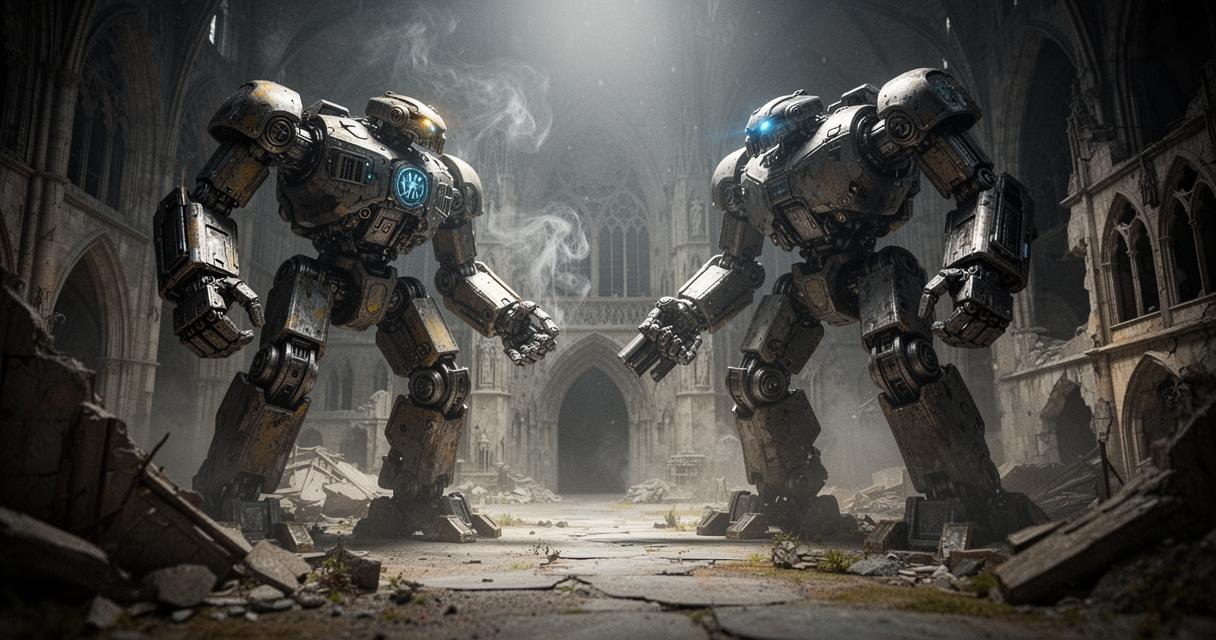
The Imperium does not hold a monopoly on god-machines. The Eldars field their own graceful war constructs — sleek, psychically attuned engines that move with an almost organic fluidity utterly unlike the thunderous advance of an imperial Warlord. Where imperial Titans project raw, industrial metal might, Eldar machines embody a different philosophy entirely: precision, speed, and the wisdom of ancient civilisations. Meanwhile, the Orks bring their own brand of terrifying enthusiasm to the arms race, constructing vast Gargants from salvage and brute ingenuity that should not work but somehow, spectacularly, do.
These clashes — Warlord against Eldar engine, imperial Legions against Ork warlords — represent Warhammer at its most cinematic. They are the moments the hobby was built around, the grand confrontations that justify forty years of lore, argument, painting, and play. As new plastic kits join the range and new editions refine the rules, the god-machines march on, as imposing and as thrilling as they have ever been across the long, war-scarred history of the Warhammer universe.